Print v Digital: Why You Need Both
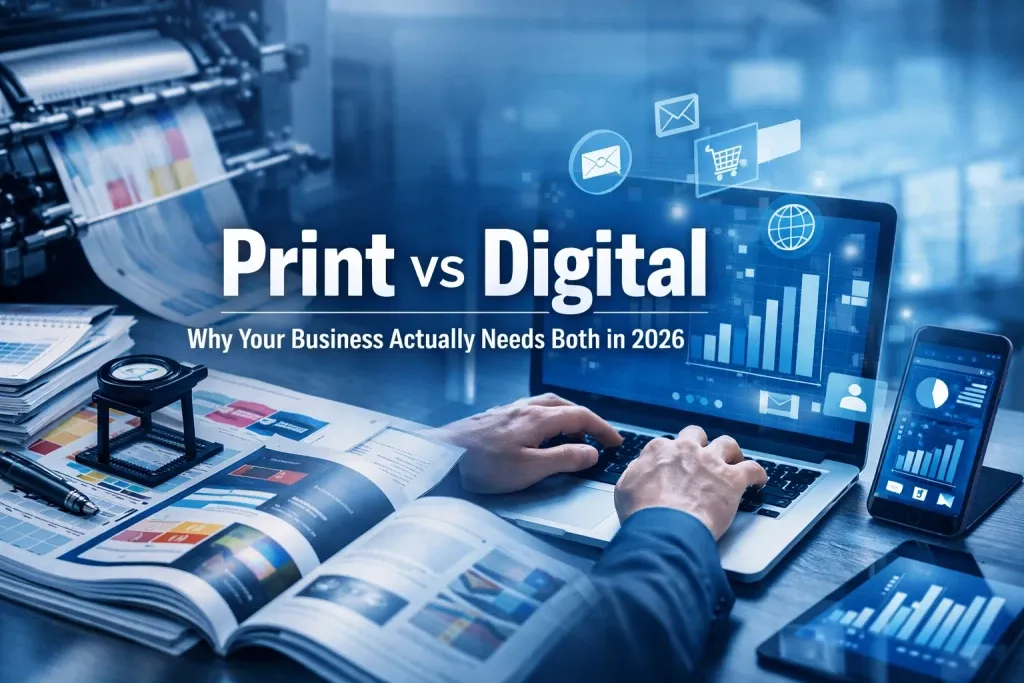
Let's get one thing straight: the “print versus digital” debate is over. The real question in 2026 isn't which one you should choose: it's how you're going to use them together to actually grow your business.
Campaigns that combine print and digital are 400% more effective than digital alone. That's the difference between a campaign that limps along and one that actually delivers results.
Why Print Still Commands Attention
We're drowning in digital. Emails, notifications, social media ads, banner ads and video ads are relentless. The average person is bombarded with thousands of digital messages every day, and they've become expert at tuning them out.
Print cuts through that noise. 82% of consumers trust print advertisements when making purchasing decisions: the highest trust level of any marketing channel.
Print achieves a 78% recall rate compared to just 46% for digital ads. People remember what they can touch, hold and experience physically. A well-designed business card, a quality brochure or an eye-catching poster creates a memory in ways digital simply can't replicate.
Digital Fatigue Is Real (And Your Customers Feel It)
Screen fatigue is reshaping how people engage with marketing. We've all experienced it: closing an email without reading it, scrolling past an ad without seeing it or dismissing a notification without thinking.
Physical mail stands out precisely because it's less crowded. When was the last time you received 200 pieces of post in a day? Probably never. But 200 emails? That's Tuesday.
A professionally printed piece — whether it's a substantial business card, a poster that catches the eye from across a room or a brochure with sharp, vibrant imagery — demands attention in a way digital messages can't match.
The Power of Integration: 1 + 1 = 3
Print doesn't replace digital, and digital doesn't replace print. They amplify each other.
Combining direct mail with digital media creates a 118% lift in response rates compared to digital-only campaigns. Direct mail gets a 4.4% response rate on average, while email manages just 0.6%.
Print introduces
A well-designed mailer or brochure arrives in someone's hands, builds trust and legitimizes your message.
Digital reinforces
Follow-up email, retargeting and social posts extend that moment in a coordinated, intentional way.
People recall 70% more information from print marketing than digital media. Reinforcing that print message with digital touchpoints builds on a strong foundation.
Practical Applications: Where Print Actually Works
How does this look in real life for your business?
Business cards printing that opens doors
Business cards aren't dead — bad business cards are dead. A premium, well-designed card at a networking event or client meeting remains a physical reminder of who you are. Pair it with a LinkedIn connection request or follow-up email to create a multi-touch relationship that sticks.
Poster printing for local impact
Digital ads are brilliant for targeting. But a shop window, community board or office wall can reach people who aren't online at that moment. Geotargeted social ads in the same area can amplify the impact.
Brochure printing that tells your story
Brochures provide space to explain, showcase and guide without notifications or distractions. Add a QR code that links to your website or a specific landing page to bridge physical and digital seamlessly.
Modern Print Is Smarter Than You Think
Modern printing services have evolved to match the pace and sophistication of digital marketing.
- Variable data printing: personalise every piece with names, offers and images at scale.
- QR codes: bridge the gap effortlessly and track engagement.
- Fast turnaround: launch print campaigns alongside digital efforts without waiting weeks.
89% of marketers agree that print marketing complements digital campaigns effectively. That's not nostalgia: it's experienced professionals recognising what works.
Why Quality Matters More Than Ever
Poor-quality print actually damages your brand. If you're going to use print in 2026, it needs to be good. Really good.
Cheap business cards that bend and fade tell people you cut corners. Posters with washed-out colours or pixelated images suggest you don't care about details. Brochures on flimsy paper with unclear text end up in the bin before anyone reads them.
Invest in quality printing services so your printed materials reflect the professionalism and care you put into every other aspect of your business. At Print RFT, that's our mantra: Right First Time. Every Time.
Building Your Integrated Strategy
Here's a simple framework:
- Start with clear goals. Define what you want to achieve: lead generation, brand awareness or event attendance.
- Map the customer journey. Use print for awareness and trust-building, and digital for engagement and action.
- Create cohesion. Ensure your print and digital materials share messaging, design and tone.
- Track and refine. Use unique URLs, QR codes and response tracking to see what's working.
The Bottom Line
You don't have to choose between print and digital. You need both. Businesses that thrive are those that recognise each channel's strengths and use them together strategically.
Print builds trust, commands attention and creates memorable physical experiences. Digital extends reach, enables precise targeting and drives immediate action. Together, they create a marketing presence greater than the sum of its parts.
Ready to create a marketing strategy that actually works in 2026? Let's talk about how print and digital can work together for your business.